How to sell books on Amazon: 7 ways to get noticed
Thousands of new books arrive on Amazon every day. Most stay invisible, not because they’re bad, but because Amazon doesn’t know who to show them to. Amazon is first and foremost a search engine: it promotes books it understands and that sell. Here are seven areas to check, in order.
1. Show up in the right searches
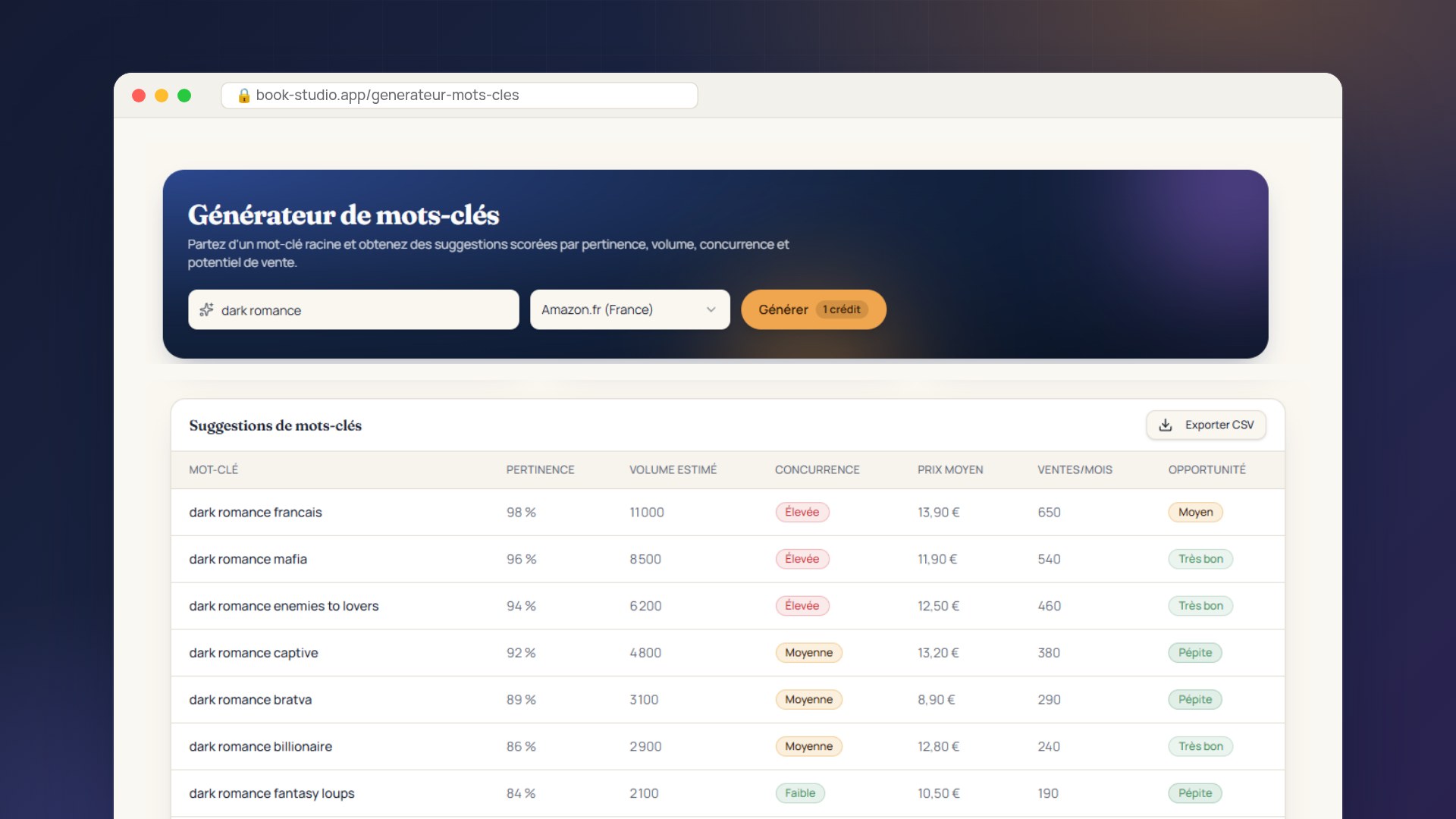
Readers find books by typing phrases into the search bar. Your title, subtitle and 7 KDP keywords determine which searches your book can appear in. Try this simple test: type your main phrase into Amazon. If your book doesn’t appear in the first few pages, Amazon isn’t associating it with that search.
- Choose specific phrases of 2 to 4 words rather than individual words.
- Check that there’s real demand: competing books with strong sales rankings in that search are a good sign.
- Don’t repeat words from your title in your keywords.
2. Choose categories where you can stand out
Ranking in a category brings visibility. A specific, less crowded category gives you a chance to reach its top 100, or even earn a “#1 Best Seller” badge. Check the rankings (BSR) of the leading books: if they all have very low BSRs, indicating strong sales, aim for a more specific subcategory.
3. Make your cover look the part
On a phone, your cover is the size of a postage stamp. In half a second, it needs to say “this is a thriller” or “this is a vegetarian cookbook”. Compare it with the top 20 bestsellers in your category: colors, typography and title readability.
4. Write a description that sells, not a summary
Your description isn’t a summary: it’s a sales page. Start with a strong hook, introduce the stakes or benefit, explain who the book is for, then finish with an invitation to read it. Keep it easy to scan with short paragraphs and, if possible, add A+ content (the visuals displayed below the description).
5. Get reviews early
Reviews reassure buyers, and a book without reviews struggles to convert. Never buy them: it’s prohibited, and Amazon removes them. Add a request for a review at the end of your book, reach out to your readers or a team of beta readers, and give it time.
6. Price in line with your market
Look at the prices of comparable books with strong sales rankings. An overpriced ebook discourages new readers; price it too low and it can look amateurish. For ebooks, the range eligible for the 70% royalty is often a good starting point. Test, watch the effect on your BSR, and adjust.
7. Kick-start sales with Amazon Ads
Amazon promotes books that are already selling. A small Sponsored Products campaign with a limited daily budget can generate the first sales that set this positive cycle in motion. Monitor your ACOS from the start so you don’t spend more than you earn.
Where should you start?
There’s no need to change everything at once. Start with your weakest area: often keywords or categories, sometimes the cover. An outside perspective can help you spot it.
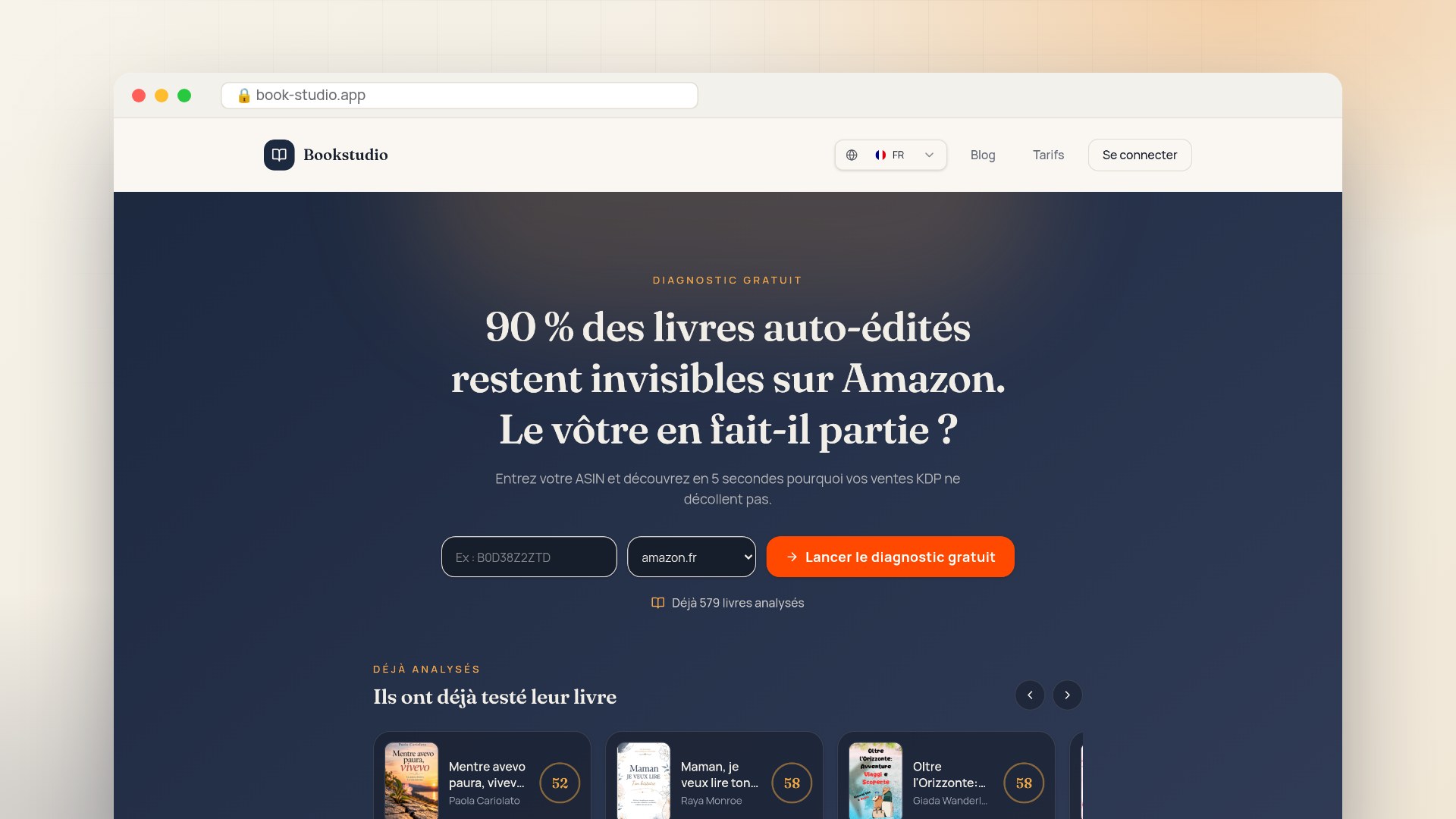
That’s exactly what Bookstudio’s free diagnostic does: using your book’s ASIN, it scores your Amazon listing and identifies what’s holding back your sales.